
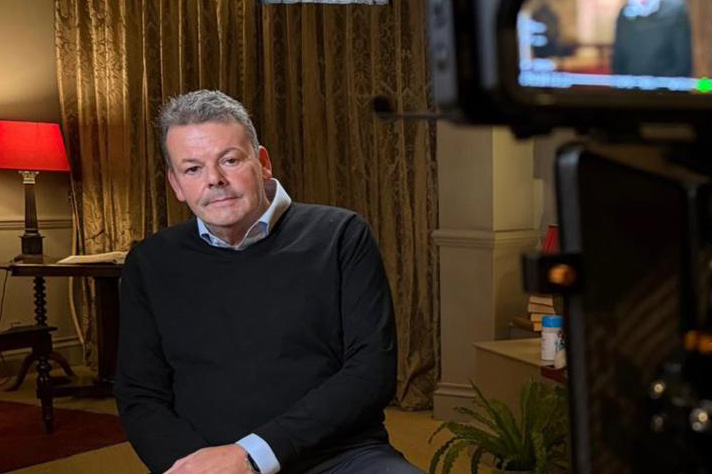
Today, I am being interviewed by Jo Conchie for Britain’s Most Evil Killers about the murder of Michaela Hall.
I am speaking about Michaela with the express permission of her father, Peter Hall. It’s a responsibility I take very seriously.
Michaela was a deeply caring person. That capacity to care, to trust and to keep believing in another human being is important to understanding her story. But her murder also raises difficult questions about what those around someone experiencing domestic and family violence (DFV) notice and what we miss.
The coroner who investigated Michaela’s death concluded that there had been serious shortcomings and errors, including an incorrect assessment of the risk posed to her. He concluded that, had those failures not occurred, it was more likely than not that Michaela wouldn’t have died when she did.
So, as I prepare to face the cameras today, there is one question particularly on my mind:
Will we be asking the right questions?
I recently presented for the Mental Health Academy on the importance of asking better questions in therapy, particularly in relation to suicide prevention. Asking effective questions is particularly important when encountering DFV.
Sometimes the question is not simply, “Why didn’t she leave?”
It might be:
“What made leaving so difficult for this particular person?”
“How did she understand what was happening to her?”
“Were there aspects of the way she thought, trusted, communicated or related to other people that made coercion harder to recognise?”
Responsibility for abuse always belongs to the abuser, but there’s a growing body of research suggesting that neurodivergent people can face particular vulnerabilities in abusive relationships. Studies involving autistic adults, for example, have found higher levels of interpersonal victimisation and have identified factors such as difficulty interpreting another person’s intentions, taking communication more literally, being particularly trusting, acquiescing to others, and finding manipulation or coercion difficult to recognise.
This means that those of us around a vulnerable person – therapists, doctors, friends, relatives, colleagues, police officers, social workers and others – may need to become much better at recognising the individual in front of us rather than expecting every victim to behave, disclose or leave in the way we imagine they should.
We may need to ask different questions to really unlock what is happening.
Identifying DFV and asking the right questions are the first two rules of my SOS-DV-8 model, and I am now developing this into a short, practical handbook built around eight rules for people who may find themselves acting as gatekeepers in domestic and family violence, and that potentially means any of us!
You don’t have to be a therapist, police officer or domestic abuse specialist. One day, somebody may tell you something, or you may notice something. As the CEO of the Woman’s Fund in Miami, Marya Meyer says on Michaela Hall Day 2023, you don’t want to ‘be numb’ when this happens.
If today’s interview about Michaela contributes anything, I hope it contributes to getting SOS-DV-8 in as many hands as possible. Rather than being part of another retelling of a terrible murder, I am determined this interview will lead to better questions, better recognition and, ultimately, fewer families having to endure what Michaela’s family has.